
WIMIT wants to turn parents from the same school into a real community
A conversation with Stéphane Rouichi, founder of Proxima Systems and creator of WIMIT.

WIMIT began with a simple observation: every day, parents from the same school face the same constraints, sometimes make the same journeys and live only a few streets apart, yet they do not necessarily have the tools they need to support one another.
Developed by Proxima Systems, WIMIT aims to turn that proximity into a real community. We spoke with its founder.
From Proxima Systems to WIMIT
Before we talk about WIMIT, could you introduce yourself and tell us what Proxima Systems does?
I’m Stéphane Rouichi, founder of Proxima Systems. We develop digital solutions around a fairly simple idea: start with concrete, everyday problems and explore how technology can provide a genuinely useful response.
We are particularly interested in situations where technology can help people organise themselves more effectively or connect with one another. WIMIT grew out of that approach.
So how did the idea for WIMIT come about?
It came from a very ordinary observation.
Every day, parents make the same journeys to the same schools, often with spare seats in their cars. At the very same time, perhaps only a few streets away, another parent may be struggling to get their child where they need to go.
These families already belong to the same community. WIMIT grew from the idea that this proximity could be used to create mutual support.
In practical terms, what exactly is WIMIT?
WIMIT is a community platform for families from the same school.
Children’s journeys are a central use case today, but our ambition is broader. The school primarily gives us a trusted circle of families who already share part of their daily lives.
WIMIT then gives those families the tools they need to organise and help one another.
A community first, a school-run app second
How does a journey work in practice?
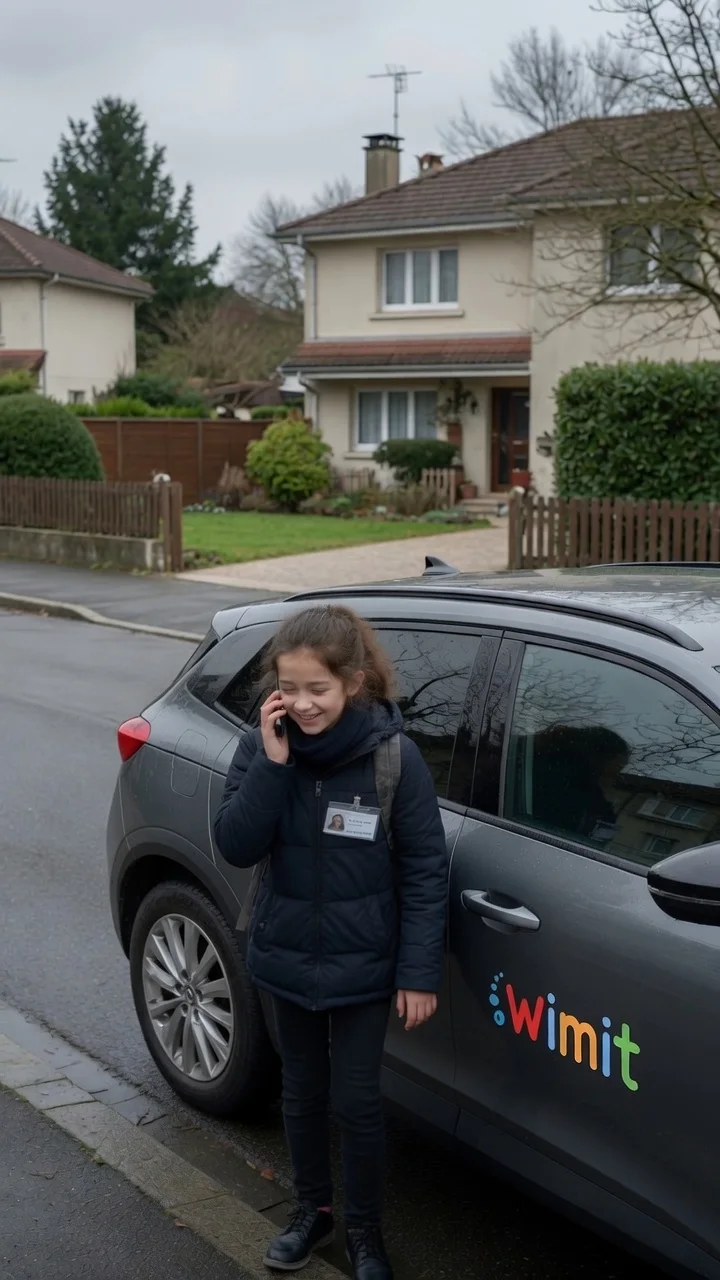
One parent posts a transport need for their child. Another parent in the community can make an offer, which the first parent is free to accept or decline.
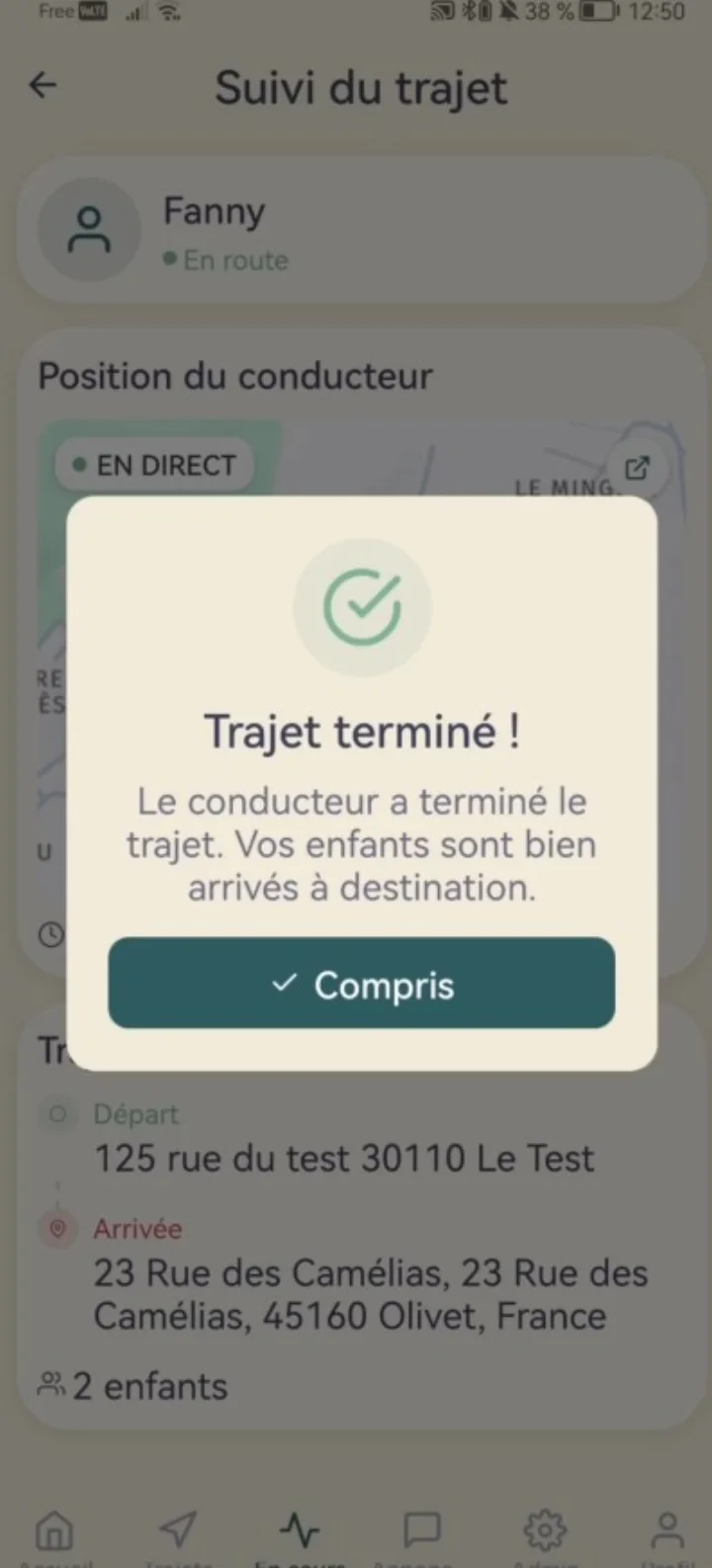
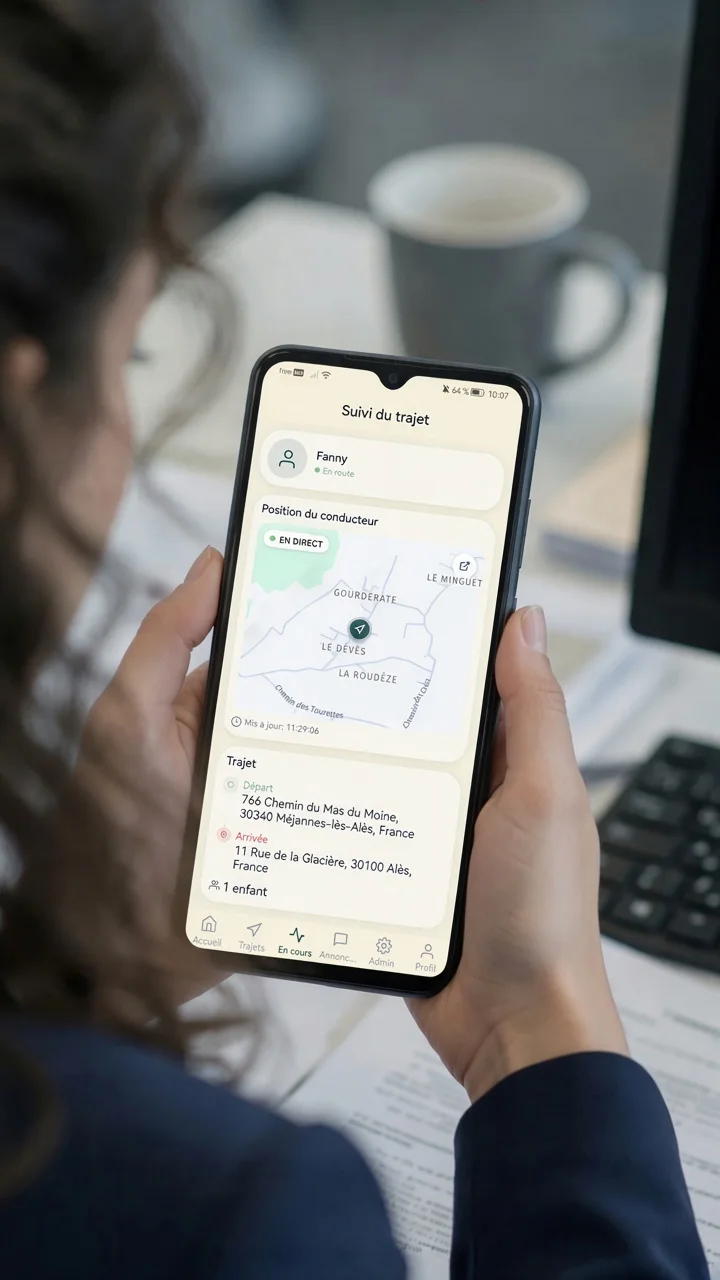
Once the journey has been arranged, WIMIT supports the families at each stage with advance alerts. During the journey, the parent can also follow the live GPS location until the child arrives.
That sounds more structured than ordinary carpooling. Why is that?
Because children are involved.
We deliberately kept a clear process of request, offer and acceptance. We want WIMIT to be easy to use, but not simplistic.
When a parent entrusts their child to someone else, everything needs to be clear: who is driving, when the journey is taking place, which vehicle is being used and how the journey is progressing.
Why did you choose to organise WIMIT around the school?
Because the community already exists.
Parents from the same school cross paths, often live relatively close to one another and deal with the same timetable and travel constraints.
The school therefore becomes a trusted circle. We are not trying to connect random people across an entire city. We are making an existing local community more useful.
How do you prevent just anyone from joining a school community?
WIMIT communities are closed and access is controlled.
When a school introduces WIMIT, for example, we can provide a unique code and QR code for the school to share with families, while checking access against an approved list of email addresses supplied by the school.
Parents can also discover WIMIT independently and ask to join their school, but access to the community is never automatic.
Does that mean schools have to manage WIMIT?
No, and that is important.
A school can help introduce its community to families, but we do not want to burden it with another tool to administer every day.
WIMIT handles access control. From that point on, organising journeys and supporting one another remains in the hands of the parents.
Why not simply create a WhatsApp group for parents?
Because the use case is different.
WhatsApp is very useful for communication, but as soon as many families need to organise multiple requests, offers, times and journeys, information quickly gets lost.
WIMIT gives that information structure. A request remains easy to identify, an offer is linked to it, the offer is accepted or declined, and the resulting journey is then organised and tracked.
WhatsApp organises a conversation. WIMIT organises an action.
Keeping the network active
WIMIT also has a system called “Bon Points”. How does it work?
It is based on reciprocity.
A parent receives one Bon Point when they join WIMIT. When they drive another family’s child, they earn one Bon Point. When their own child benefits from a journey, they use one.
Bon Points also play an important role in building the network. They encourage parents to take part and help maintain a strong community, both in terms of active members and geographical coverage.
We want to avoid a network made up entirely of people requesting journeys, or one where only a handful of drivers are constantly called upon. The more support circulates locally between families, the more useful the network becomes.
The principle is simple: “Today for you, tomorrow for me.”
What happens if a family needs far more journeys than it can offer?
We have planned for that. Families do not all face the same constraints or have the same availability.
Additional Bon Points can therefore be obtained directly in the app. The aim is not to impose perfect equality between families, but to preserve a mechanism that supports reciprocity and keeps the network active.
Is that also part of WIMIT’s business model?
Yes, in part, but that is absolutely not the purpose of the system.
On the contrary, our aim is for WIMIT to remain completely free for as many families as possible. A parent who participates in the community, helps others and receives help should be able to use WIMIT without paying.
Additional Bon Points can be purchased when a family needs more help than it is able to provide, and that does contribute to the business model.
But our first measure of success is not selling Bon Points. It is seeing genuine communities emerge, with parents who truly help one another.
How do you plan to get these communities started in schools?
One of the ways we are doing that is through the WIMIT Parent Ambassador role, with the idea of having a parent contact in each school.
The role is deliberately simple: introduce WIMIT locally and help the community get started. The Parent Ambassador does not become a salesperson or an app administrator.
In return, Parent Ambassadors receive exclusive benefits and can use WIMIT free of charge without the usual reciprocity constraints on journeys.
The aim is to have people who know their school and can simply give their community its first push.
WIMIT beyond school runs
Is WIMIT only for organising journeys?
No. Journeys are an important use case, but parents’ lives clearly do not stop at the school gate.
WIMIT can also be used to organise moments such as children’s birthday parties with the families involved.
We are also developing tools for managing family life, including a shared household calendar that helps members of the same family coordinate activities, schedules and everyday constraints.
The underlying idea remains the same: avoid making parents juggle multiple tools and simplify the way they organise their lives.
You have also developed WIMIT Boost. What is it?
WIMIT Boost starts with another very practical situation: a child comes home with marked schoolwork and the parent can see the mistakes, but may not know how to explain them.
The parent photographs the marked paper. WIMIT Boost identifies concepts that do not yet seem to be fully understood, explains the mistakes in language the parent can reuse and suggests targeted exercises.
The goal is not to do the work for the child, but to turn a mistake into an opportunity to learn.
What does WIMIT Boost have to do with children’s journeys?
It depends on how you define WIMIT.
If WIMIT were simply a school carpooling app, the connection would indeed be difficult to understand.
But our ambition is different: we want to simplify everyday life for school parents.
A transport problem is part of that. So is a complicated family schedule, a birthday party to organise or a school topic that a parent does not know how to explain.
Is there a risk that WIMIT will eventually try to do everything?
Of course, and we need to remain alert to that.
Our objective is not to pile up features. Every service must begin with a real problem faced by families and offer a response that makes sense within WIMIT.
Technology is not an end in itself. It must remain a tool serving a concrete need.
The vision for the future
What is your long-term ambition for WIMIT?
To make WIMIT a genuine everyday companion for families.
Sometimes the solution will come from the community: a parent who can drive your child or help you in some other way. Sometimes it will come from a tool that simplifies household organisation or helps a parent understand a learning difficulty.
But the idea behind all of this remains the same: simplify parents’ lives and rebuild mutual support around communities that already exist.
A few years from now, what would make you feel that WIMIT had succeeded?
If parents tell me that they did not know one another before WIMIT and now regularly help each other, that would already be a success.
Of course we want WIMIT to grow, but our first objective remains creating communities that genuinely work.
And if you had to sum up WIMIT in one sentence?
WIMIT is mutual support between parents from the same school, organised simply and built on trust.
WIMIT is mutual support between parents from the same school, organised simply and built on trust.